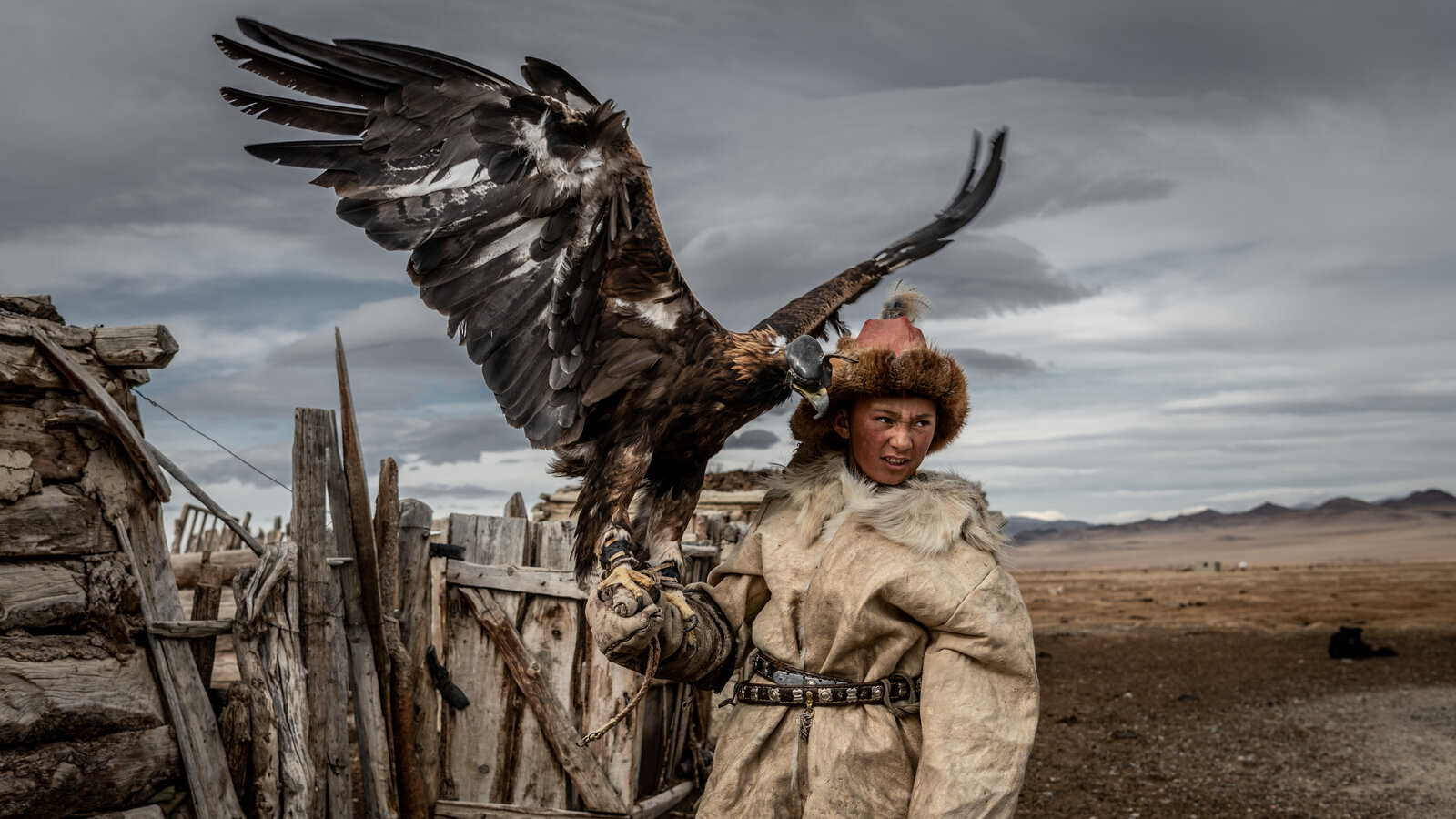
Gazing upwards at the vast expanse, one might often spot an eagle, a truly magnificent creature, soaring with unparalleled grace against the azure backdrop. These apex predators, with their piercing eyes and formidable talons, embody power and independence. For centuries, their solitary majesty has captivated human imagination, prompting a fundamental question that resonates through casual observation and scientific inquiry alike: do eagles travel in groups? The answer, far from a simple yes or no, unfurls a rich tapestry of avian behavior, revealing surprising nuances about their social dynamics and survival strategies.
The prevailing image of a lone eagle, master of its domain, is deeply ingrained in our collective consciousness for good reason. For much of their lives, especially outside the breeding season, many eagle species are indeed solitary hunters, meticulously patrolling immense territories for sustenance. This independent existence is remarkably effective for securing resources in competitive environments. However, to simply conclude that eagles are always solitary travelers would be to overlook the intricate complexities woven into their life cycles, particularly when vast distances and abundant food sources dictate a different approach, challenging our preconceived notions about these majestic raptors.
| Eagle Travel & Social Behavior Overview | |
|---|---|
| General Behavior | Primarily solitary or in pairs during non-breeding seasons and while hunting within established territories. This strategy minimizes competition for food resources. |
| Breeding Season | Form monogamous pairs, often for life, and work cooperatively to build nests, incubate eggs, and raise chicks. Travel is typically confined to their nesting territory. |
| Migration Patterns | Many species undertake annual migrations. During these long journeys, eagles can be observed congregating in significant numbers, forming loose groups or “kettles” to conserve energy by riding thermals. |
| Food Abundance | When food sources are exceptionally plentiful and concentrated (e.g., salmon runs, carrion sites, or wintering waterfowl), eagles will temporarily gather in large numbers, sharing the bounty. |
| Key Species Examples | Bald Eagles are famous for congregating at salmon rivers. Golden Eagles often migrate in small groups or loose formations. Steller’s Sea Eagles gather at winter fishing grounds. |
| Reference Link | Audubon Society ⎼ Bald Eagle Profile (Provides detailed info on a prominent eagle species) |
The notion of eagles as fiercely independent, solitary beings holds true for their daily hunting routines. A single eagle, patrolling its vast hunting grounds, operates with the precision of a master strategist, optimizing its chances of capturing prey without the distraction or competition of others. This individualistic approach is profoundly rooted in their evolutionary success, ensuring that each bird can sustain itself efficiently. Ornithologists, studying raptor behavior for decades, have consistently noted this preference for autonomy in non-migratory contexts, emphasizing the role of territoriality in their survival.
However, the narrative shifts dramatically when the seasons change, and the imperative of survival demands collective action. During migration, for instance, many eagle species, driven by instinct and changing climates, embark on incredible journeys spanning thousands of miles. It is during these epic migrations that eagles, surprisingly, can be observed forming temporary, yet remarkably effective, groups. These aggregations, often referred to as “kettles,” are not social gatherings in the traditional sense but rather strategic formations. By riding thermal updrafts together, they conserve precious energy, spiraling skyward in a breathtaking aerial ballet before gliding effortlessly across vast landscapes. This collective efficiency is a testament to nature’s ingenious solutions, transforming individual strength into a shared advantage.
Beyond migration, another fascinating scenario where eagles congregate is at sites of abundant food. Consider the majestic Bald Eagles, particularly in regions like the Pacific Northwest, where salmon runs provide an incredibly rich, concentrated food source. Here, hundreds, sometimes thousands, of eagles can be observed sharing the bounty, perching in trees lining the rivers, and swooping down to feast on the fish. While individual squabbles over prime fishing spots or carcasses are common, the sheer volume of available food temporarily overrides their typical solitary tendencies, fostering an environment of communal, albeit competitive, feasting. This behavior, observed extensively by wildlife photographers and researchers, offers a compelling counterpoint to the lone hunter archetype, showcasing their adaptability.
Leading experts, like Dr. Alistair Finch, a renowned avian ecologist, often highlight the pragmatic nature of eagle group dynamics. “Eagles are ultimate opportunists,” Dr. Finch once noted in an interview. “Their social behavior is less about camaraderie and more about energy expenditure and resource acquisition. If traveling or feeding together provides a significant advantage, they will absolutely do it. It’s a highly intelligent, adaptive strategy, showcasing their unparalleled ability to thrive in diverse conditions.” By integrating insights from AI-driven tracking data and traditional field observations, scientists are continuously uncovering new layers of complexity in these magnificent birds’ lives, reinforcing the idea that their behavior is far from monolithic.
Ultimately, the question of whether eagles travel in groups reveals more about our understanding of nature’s intricacies than it does about a simple behavioral pattern. While the image of the solitary eagle remains powerful and largely accurate for much of its life, acknowledging their strategic congregations during migration or at plentiful food sources paints a more complete, vibrant picture. These moments of collective action are not deviations from their nature but rather sophisticated adaptations, allowing them to overcome environmental challenges with astonishing resilience. As we look forward, continuing to study and protect these incredible raptors, we gain not only a deeper appreciation for their complex lives but also invaluable lessons in adaptability and survival, echoing the enduring spirit of the wild.